
Welcome to Japan: The Land of Orderly Escalators
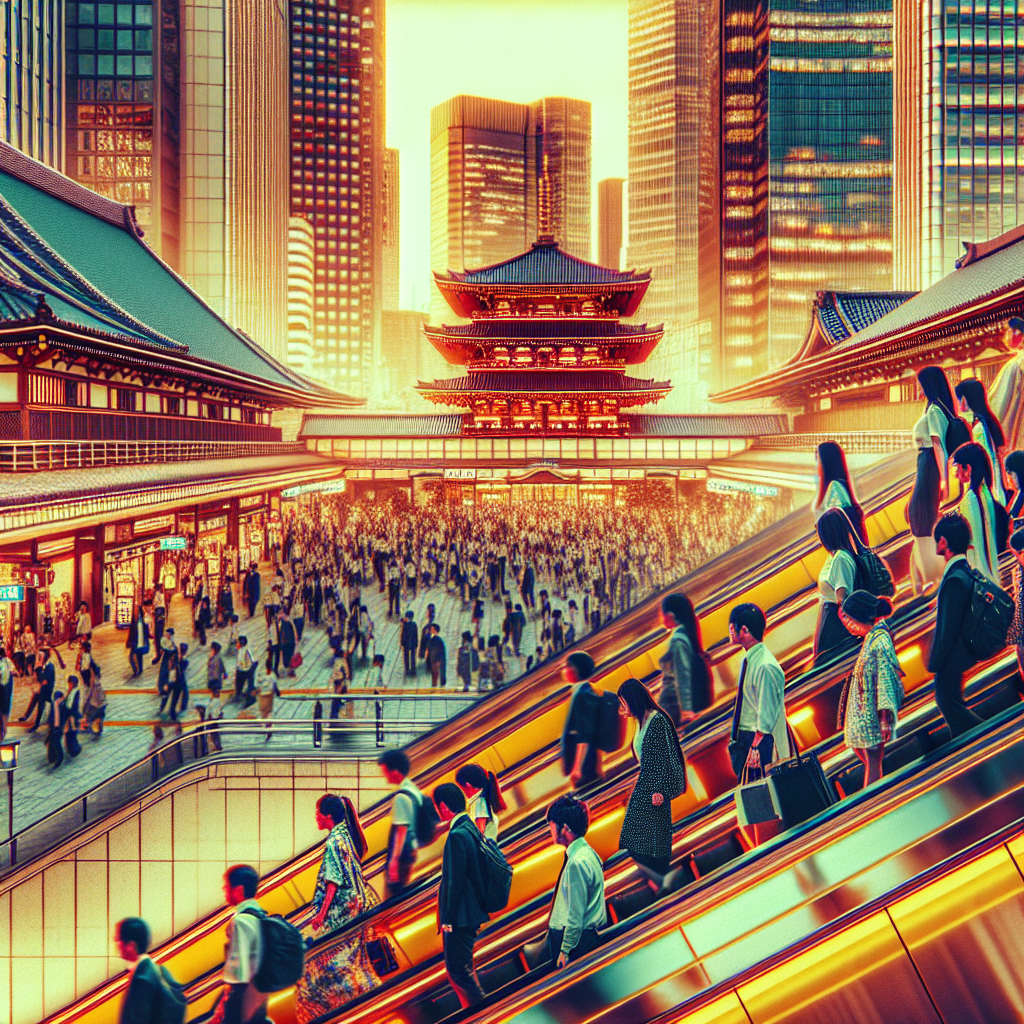
Upon arriving in Japan, one of the first things you’ll notice is the impeccable order in which people queue for escalators. It’s like a synchronized dance of politeness, with everyone standing on one side and leaving the other open for those in a hurry. As a travel-savvy feline, I, Matatabi Taro, am here to unravel the mysteries of Japan’s escalator etiquette and help you seamlessly navigate the country’s bustling rail systems.
Tokyo’s Left-Side Standing: A Samurai Tradition
When you begin your journey from Narita or Haneda airports into the heart of Tokyo, you’ll notice everyone standing on the left side of the escalator. This practice is rooted in history, harking back to the days of the samurai. Samurai warriors carried their swords on their left hips, which made passing on the left a practical choice to avoid accidental clashes. This tradition of standing left is not just a rule; it’s a nod to Japan’s rich cultural heritage and a piece of history you get to experience firsthand.
Osaka’s Right-Side Reversal: A Merchant’s Legacy
Hop on a Shinkansen to Osaka, and you’ll find the rules flipped on their head—here, it’s all about standing on the right! This reversal is said to be influenced by Osaka’s vibrant merchant history, where traders would keep their right hands free to protect their goods. Additionally, the 1970 Osaka Expo adopted this practice, aligning with international standards. However, if you venture into nearby Kyoto, you’ll find a delightful chaos where rules blend due to the influx of global tourists. When in doubt, follow the locals and stand where they stand!
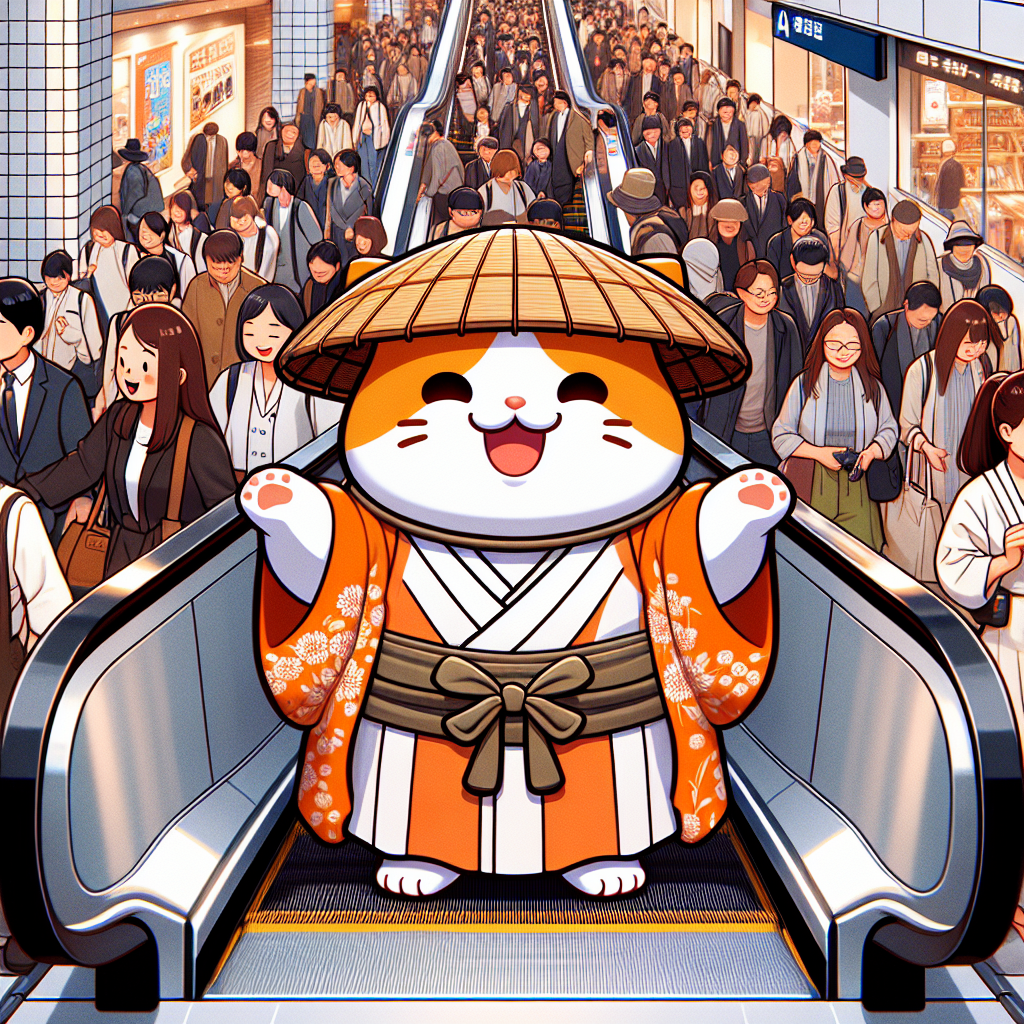
Matatabi Taro’s Secret Tip: The Official Standstill Rule
While these regional customs are fascinating, it’s essential to know that Japan’s railway companies now advocate for standing still on both sides of the escalator. This ensures safety for travelers with heavy luggage or those who may need assistance, like the elderly or families with small children. In places like Saitama and Nagoya, walking on escalators is even prohibited by law. So, the next time you find yourself on an escalator, feel free to stand comfortably and securely.
Handling Luggage Like a Pro
- Wheel Lock: If your suitcase has a lock feature, engage it as soon as you step onto the escalator to prevent any mishaps.
- Elevator Maze: Major stations like Tokyo or Shinjuku can be labyrinthine. Allocate extra time to find elevators, or better yet, travel light!
- Ultimate Hack – Luggage Delivery Service: Consider using a luggage delivery service to send your bags directly from the airport to your hotel for a stress-free journey.
- Hotel Choices: Opt for hotels within a short walk from stations to avoid the hassle of dragging luggage over uneven terrain.
Surviving Japan’s Rush Hour
Japan’s trains are renowned for their punctuality, but morning rush hours can be overwhelming. Avoid traveling between 7:30 and 9:00 AM to steer clear of the sardine-like conditions. If you must travel during these times, remember to hold your backpack in front of you to respect the space of fellow passengers.
The Magic of Suica and PASMO Cards
No need to fumble with paper tickets! Secure a Suica or PASMO card upon arrival, and enjoy seamless travel across trains, buses, and even at vending machines and convenience stores. If you have an iPhone, you can even add a digital Suica to your Apple Wallet for ultimate convenience.
// Matatabi Taro’s Travel Diary
Meow! Traveling Japan is a whisker-twitching adventure! With these tips, you’ll navigate like a pro and purr through your journey with ease. Safe travels, and see you on the train! 🐾
A Note from OHA: The Real Escalator Experience
(A quick message from my human companion and photographer, OHA!)
“The whole issue of which side of the escalator to stand on can certainly feel like a complicated problem for travelers. However, whenever I travel to Osaka and suddenly see everyone standing on the right side of the escalator, it gives me a genuine thrill. That visual cue is the exact moment I truly feel, ‘Ah, I have arrived in Kansai!’
Technically speaking, escalators were originally designed for people to stand still on both sides. We naturally open up one side as a courtesy for people who are in a hurry. But honestly, sometimes it might be a good idea to just boldly stand on the ‘walking’ side, block the path, and essentially tell the rushing crowds, ‘Hey, let’s take it easy and slow down for a minute.’ (Though if you actually try this during Tokyo rush hour, I take absolutely no responsibility for what happens to you!)”