
Hello, fellow travelers! It’s your favorite feline guide, Matatabi Taro! When planning a trip to Japan, the first transport option that comes to mind is undoubtedly the Shinkansen (bullet train). It’s incredibly fast, futuristic, and efficient. However, if you only ride the bullet train, you are missing out on the true, untouched soul of Japan’s countryside.
Sometimes, the journey itself is the destination. “Slow travel” on Japan’s local and sightseeing railway lines offers an intimate, breathtaking look at majestic mountains, rugged coastlines, and deep valleys that high-speed trains simply bypass. Many of these lines operate special “Joyful Trains” featuring massive panoramic windows, retro wooden interiors, and even onboard local cuisine.
Today, I’ve compiled a comprehensive guide to 5 of the Most Breathtaking Scenic Railways in Japan. From the drift ice of the north to the lush hot springs of the south, these rail journeys are an absolute must for photographers, nature lovers, and anyone seeking a deeper connection with rural Japan.
1. The Gonō Line (Akita to Aomori)
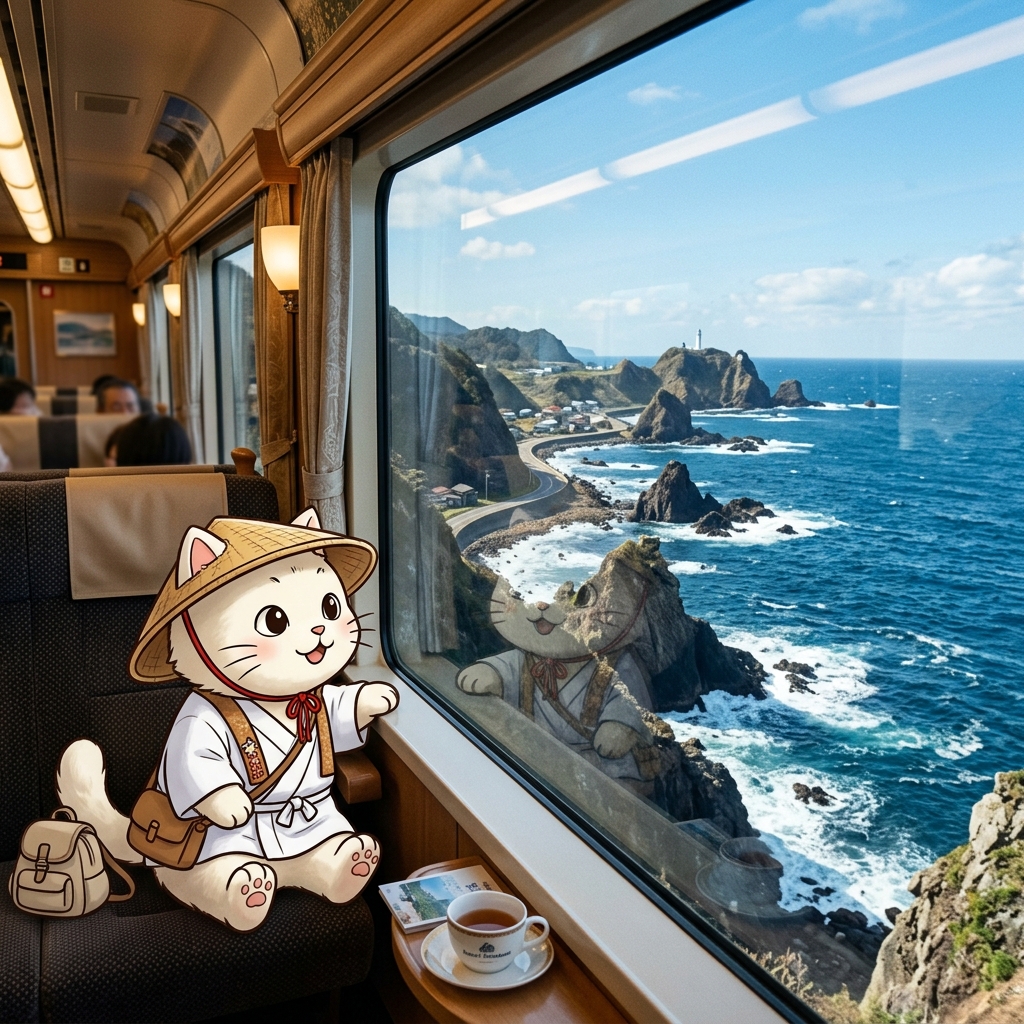
A Coastal Journey Along the Untamed Sea of Japan
Often cited as one of the most beautiful coastal railways in all of Japan, the Gonō Line hugs the rugged coastline of the Sea of Japan, connecting Akita and Aomori prefectures in the deep north of the Tohoku region.
The Experience: The ultimate way to ride this route is aboard the Resort Shirakami. This special sightseeing train features massive, curved panoramic windows and elevated seating, ensuring everyone gets a magnificent view. As the train weaves along the cliff edges, the deep blue waves of the ocean crash violently against dramatic rock formations right outside your window. The train even slows down at the most scenic spots to allow passengers to take photos.
Cultural Highlights: During the journey, the train features live onboard entertainment, including traditional Tsugaru Shamisen (a local three-stringed instrument) performances and storytelling by locals speaking in the regional Tsugaru dialect. It is a brilliant immersion into Tohoku culture.
Access & Route: The train runs between Akita Station and Aomori/Hirosaki Station. A full journey takes about 5 hours. We highly recommend stopping off at Fukaura to watch the sunset, or Shirakami-Sanchi, a UNESCO World Heritage site known for its pristine beech forests.
🎫 How to Buy Tickets: All seats on the Resort Shirakami are reserved. You must book in advance. Tickets can be purchased at JR Ticket Offices (Midori-no-Madoguchi) in Japan or online via the official JR EAST English Website up to one month in advance.
2. The Tadami Line (Fukushima to Niigata)
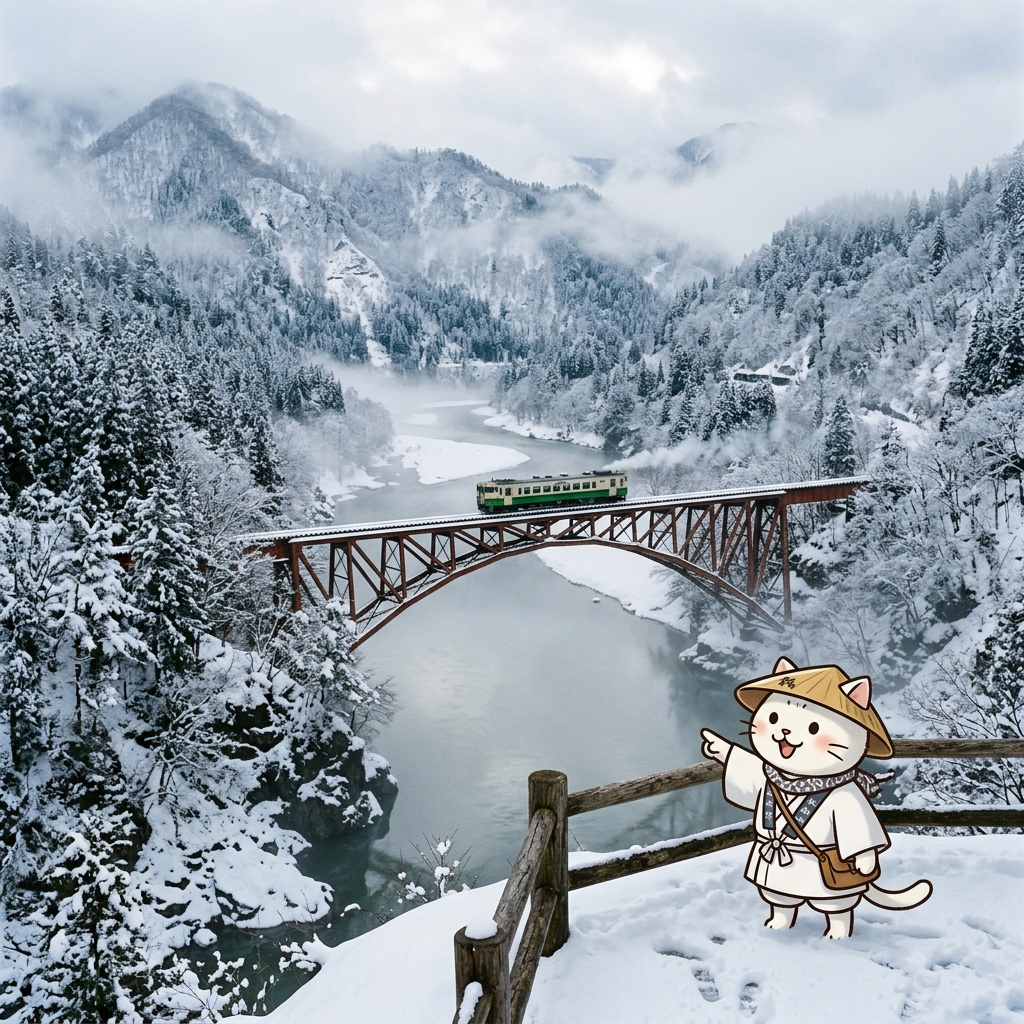
The Most Romantic Winter Railway in the World
If you’ve ever seen a breathtaking photograph of a lone train crossing a mystical bridge over a mist-covered river in a deep winter wonderland, chances are you were looking at the Tadami Line. Winding through the mountainous heart of Fukushima Prefecture, this line has achieved legendary status among international photographers.
The Experience: While beautiful in autumn when the mountains are ablaze with red and gold foliage, the Tadami Line truly shines in the dead of winter. The region experiences some of the heaviest snowfall in Japan. The train slowly makes its way through deep white valleys, crossing several iconic arch bridges over the jade-green Tadami River. The reflection of the train in the still water below is a sight you will never forget.
Recovery and Resilience: The line suffered catastrophic damage from heavy rains in 2011 and was partially closed for over a decade. Thanks to the relentless efforts and love of the local community, it was fully reopened in late 2022, making a journey on this train a symbol of regional resilience.
Access & Route: The line runs from Aizu-Wakamatsu Station in Fukushima to Koide Station in Niigata. The most famous photography spot, the No. 1 Tadami River Bridge Viewpoint, can be accessed via a short hike from Mishima Town.
🎫 How to Buy Tickets: The Tadami Line primarily operates standard local trains. No prior seat reservation is required. Important Note: IC Cards (like Suica or Pasmo) cannot be used on the Tadami Line. You must purchase a physical paper ticket with cash at the station before boarding. If you plan to travel extensively in the region, consider the JR EAST PASS for cost-effective unlimited travel.
3. Kurobe Gorge Railway (Toyama Prefecture)
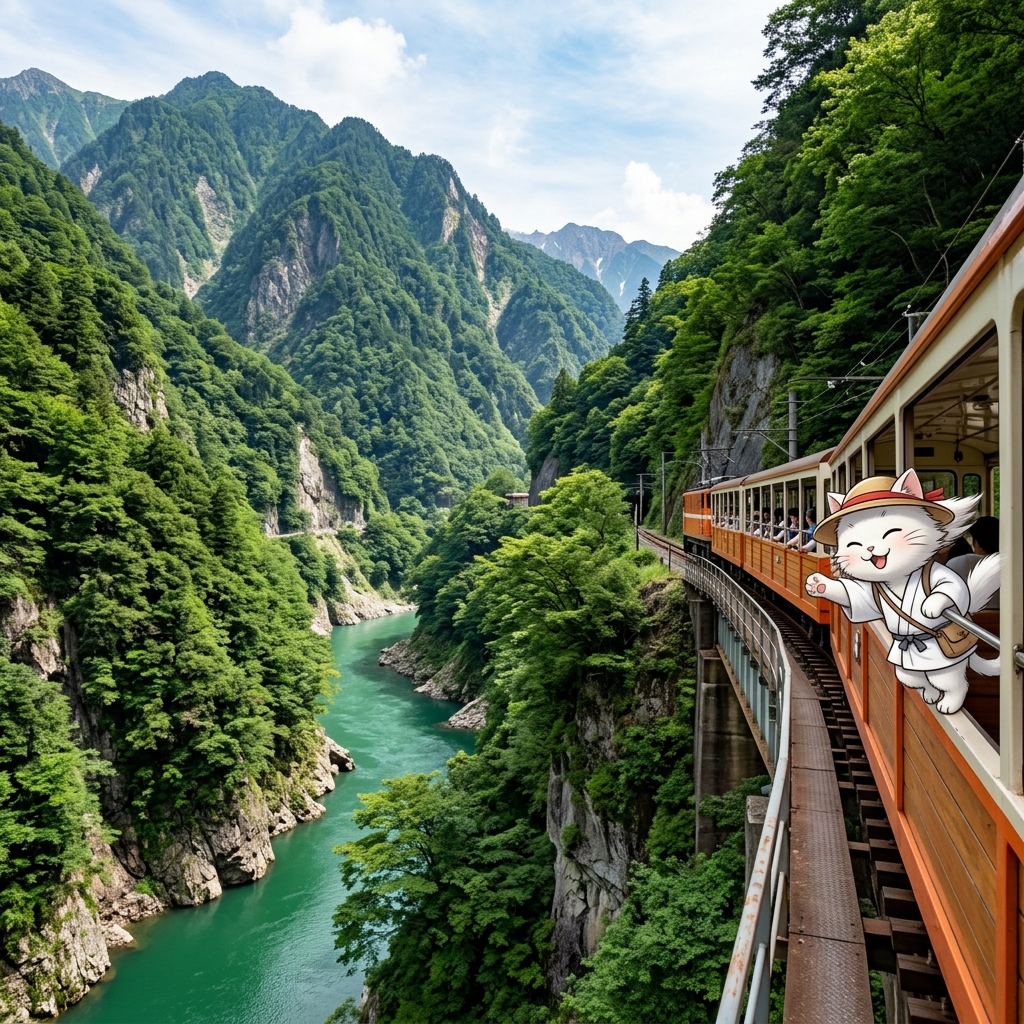
An Open-Air Trolley Deep into the Japanese Alps
For those who want to feel the wind in their hair and the mist of river rapids on their face, the Kurobe Gorge Railway in Toyama Prefecture is an unparalleled adventure. Originally constructed in the 1920s to transport materials for the Kurobe Dam, this narrow-gauge railway has been converted into one of the country’s premier sightseeing experiences.
The Experience: Passengers ride in small, open-sided trolley cars (known as “Torokko”). The train slowly chugs up the steep, V-shaped gorge along the Kurobe River, navigating over 40 tunnels and 20 precarious bridges. Because the cars are open to the air, you can smell the deep forest pine, feel the temperature drop as you enter tunnels, and hear the roaring river echoing against the cliff walls.
Highlights: The vibrant emerald green color of the Kurobe River contrasts beautifully with the fiery red autumn leaves in October and November. At the final stop, Keyakidaira, you can hike to hidden outdoor hot springs (onsen) located right on the riverbank.
Access & Route: The journey begins at Unazuki Station, which is accessible from Dentetsu-Toyama Station or Kurobe-Unazukionsen Station on the Hokuriku Shinkansen. The railway only operates from mid-April to November due to heavy winter snow.
🎫 How to Buy Tickets: Due to its immense popularity, booking online in advance is highly recommended. You can reserve your open-air Torokko tickets directly through the Kurobe Gorge Railway Official English Reservation Site.
4. Sagano Scenic Railway (Kyoto)
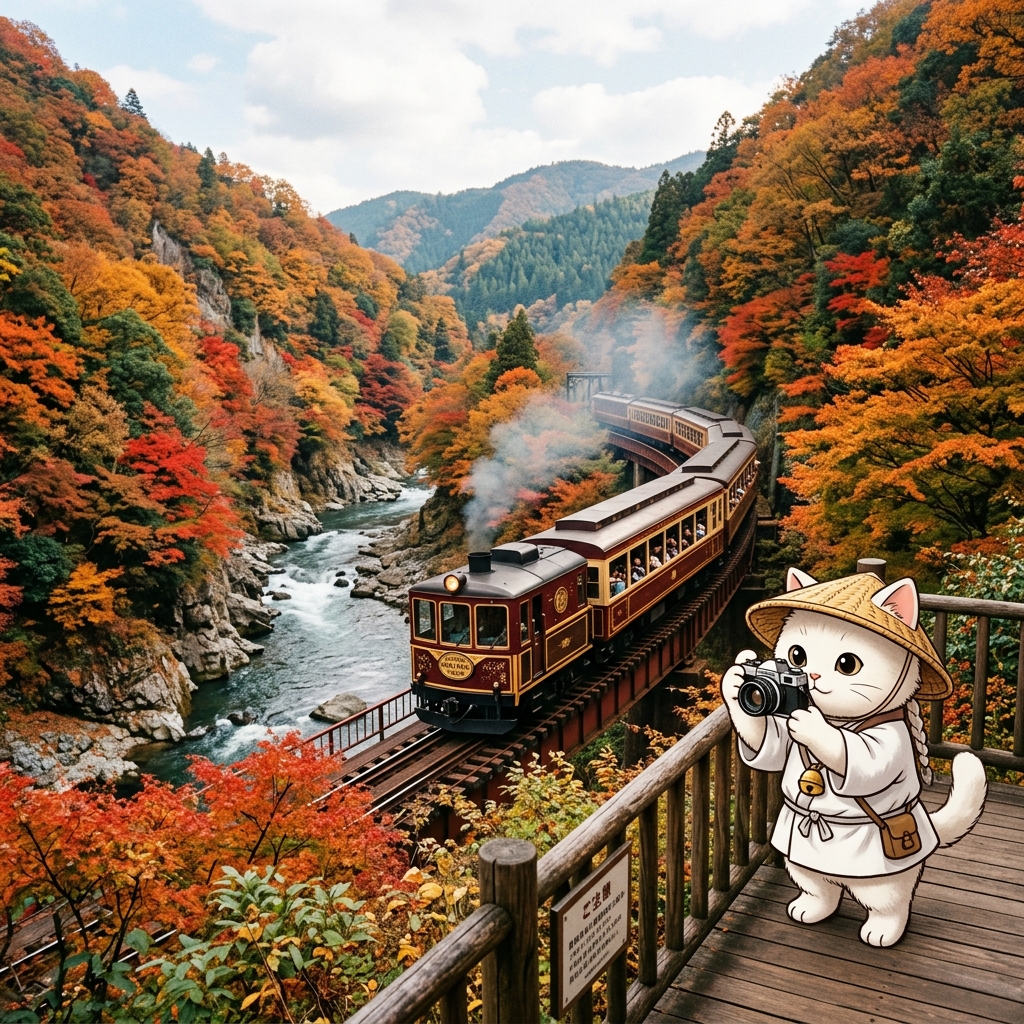
The “Romantic Train” Through Arashiyama’s Ravine
While Kyoto is famous for its temples and shrines, it also hosts one of Japan’s most delightful short rail journeys. The Sagano Scenic Railway, affectionately known as the “Sagano Romantic Train,” utilizes an abandoned section of the JR Sanin Main Line to offer a slow, nostalgic ride through the magnificent Hozugawa River ravine.
The Experience: The train itself is a beautifully restored art-deco style locomotive with elegant wooden seating and bare lightbulbs. It travels at a leisurely pace of 25 km/h, taking about 25 minutes to travel just 7 kilometers. The route follows the winding river tightly, offering up-close views of wild cherry blossoms in spring and blazing maple leaves in autumn.
The Return Trip: One of the most popular ways to experience this area is to take the train up the river to Kameoka Station, and then return to Arashiyama via the Hozugawa River Cruise—a thrilling traditional wooden boat ride navigated by skilled boatmen using bamboo poles.
Access & Route: The journey starts at Saga Torokko Station, located right next to JR Saga-Arashiyama Station. This makes it an incredibly easy half-day trip to add to any Kyoto itinerary.
🎫 How to Buy Tickets: Tickets often sell out weeks in advance during cherry blossom and autumn seasons. You can purchase them at major JR West ticket offices in the Kansai area or reserve them online via the official Sagano Scenic Railway Website.
5. Yufuin no Mori (Kyushu)
A Moving Resort Hotel in the Lush South
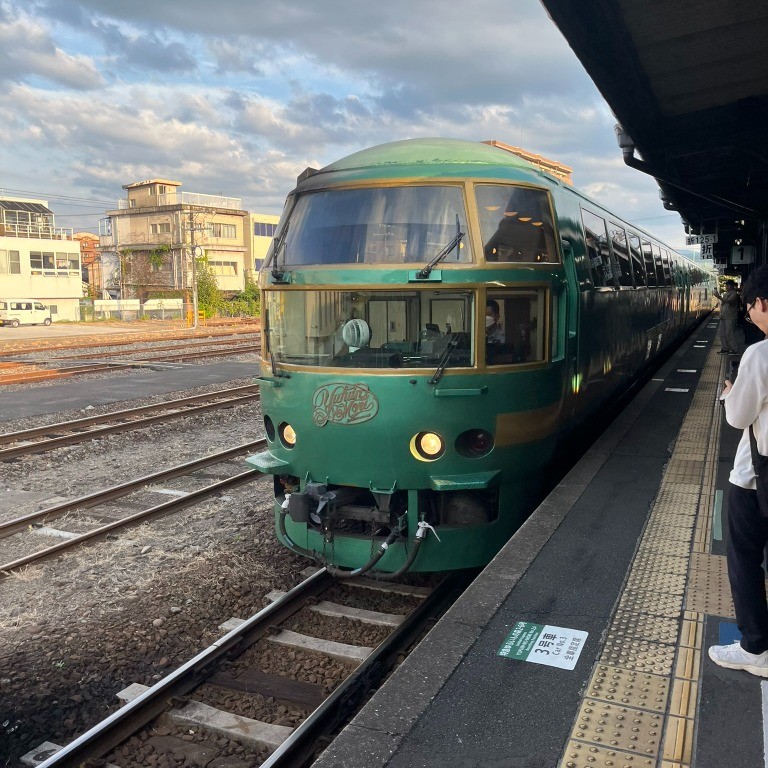
Heading down to the southern island of Kyushu, the Yufuin no Mori (Forest of Yufuin) is a premium limited express train that feels less like public transport and more like a high-end moving resort. It connects the bustling city of Hakata (Fukuoka) with the elegant, idyllic hot spring town of Yufuin.
The Experience: The train is instantly recognizable by its metallic emerald green exterior. Inside, the design uses warm, polished wood and classic green velvet seating to evoke the feeling of a European forest villa. The passenger cabins are elevated, offering a higher vantage point to look out over Kyushu’s lush countryside, rolling green hills, and unique waterfall features like the dual-tiered Jion-no-Taki falls.
Gourmet Journey: The onboard cafeteria serves highly sought-after local delicacies, including Yufuin’s famous “B-Speak” swiss rolls and specialty bento boxes made with local Kyushu ingredients. Friendly train attendants in classic uniforms provide detailed commentary and photo opportunities with commemorative signboards.
Access & Route: The train departs from JR Hakata Station and ends at Yufuin or Beppu.
🎫 How to Buy Tickets: All seats on the Yufuin no Mori are reserved. It is extremely popular and almost always sold out on the day of departure. You must book your seats up to one month in advance via the official JR-KYUSHU Train Reservation site.
A Note from OHA: Moving Paintings and Jewel Boxes
(A quick message from my human companion and photographer, OHA!)
“The railway lines introduced here weave their way through Japan’s rich natural landscapes, using the train windows as a palette to present us with deeply moving, ever-changing paintings.
For these long-distance train journeys, ‘Ekiben’—beautiful bento boxes sold at stations that are essentially jewel boxes packed with local ingredients—are beloved travel companions. However, a word of warning: be careful not to get so completely absorbed in eating your delicious Ekiben that you miss a breathtaking, fleeting moment of scenery outside your window!”
[Matatabi Taro’s Travel Tip]
Always buy your Ekiben before boarding, as popular ones sell out quickly! Have you ever tried an Ekiben on a Japanese train? Let us know what you had in the comments, meow!