
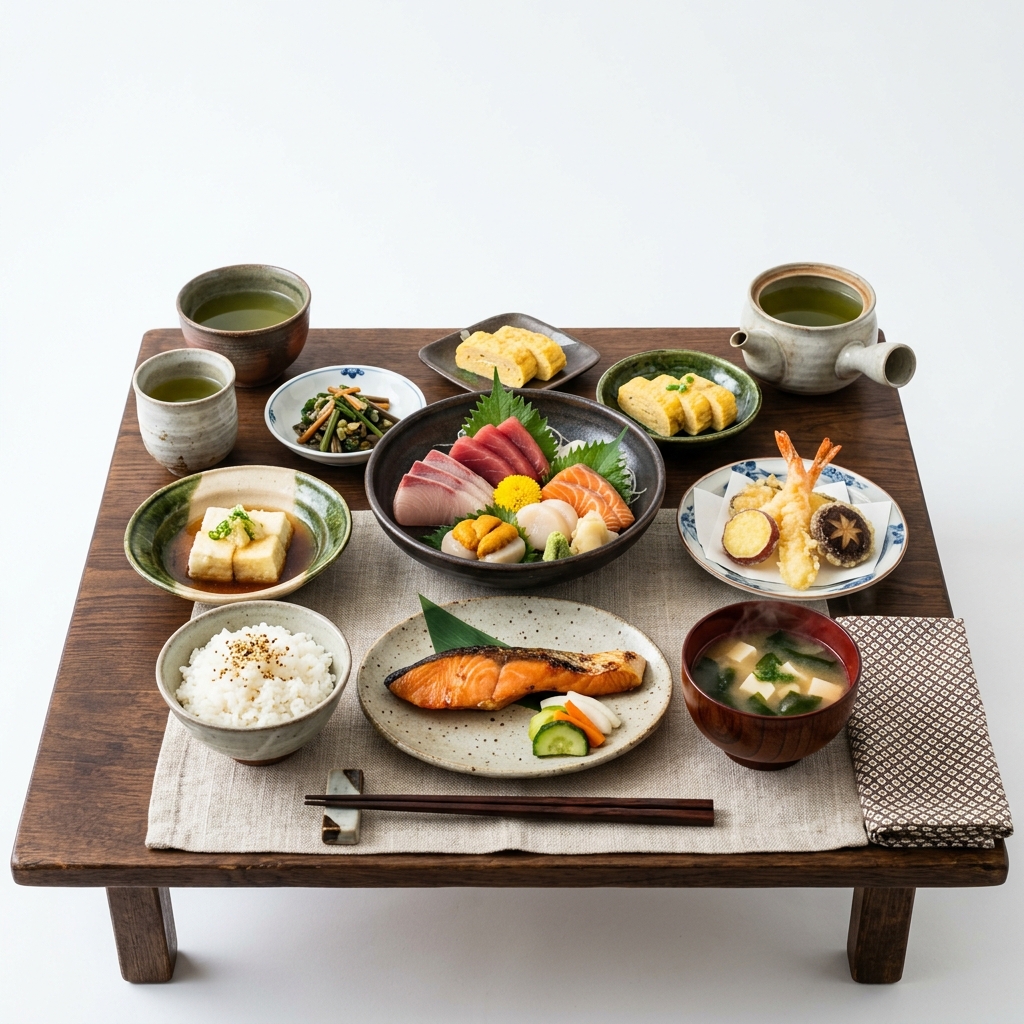
Welcome to Japan, the land of exquisite culinary traditions! As your trusty feline guide, Matatabi Taro, I’ve seen countless travelers unknowingly commit culinary faux pas that either ruin the delicate flavors of Japanese dishes or break deep-rooted cultural taboos. Today, I’ll guide you through 12 common mistakes you should avoid to eat like a true local.
Category 1: Sushi & Sashimi Fails
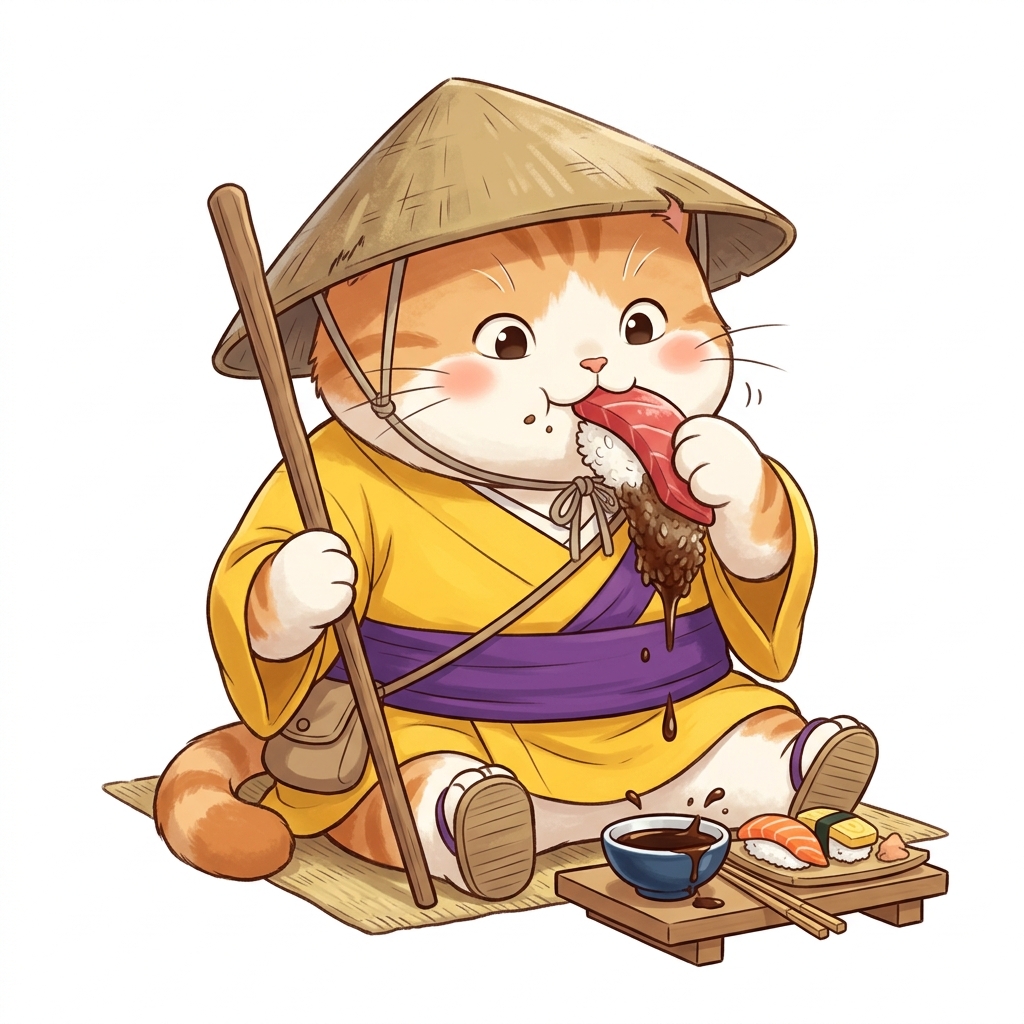
1. Drowning the Rice in Soy Sauce
When eating sushi, one of the most common mistakes is dipping the rice (shari) directly into the soy sauce. Sushi rice is meticulously seasoned with vinegar and sugar, and it is very delicate. If you soak the rice, it will absorb far too much salt, overpowering the fish, and the rice ball will likely crumble into a messy disaster before it reaches your mouth. The correct etiquette is to slightly rotate the sushi piece and gently dip only the edge of the fish (neta) into the soy sauce. This preserves the perfect balance the chef intended.
2. Making “Wasabi Soup”
In many Western sushi restaurants, it is common practice to take a large chunk of wasabi, drop it into a dish of soy sauce, and stir it vigorously until it becomes a muddy green soup. In Japan, this is considered a major faux pas. Dissolving wasabi entirely destroys its sharp, fresh aroma and makes the soy sauce look unappetizing. Instead, place a tiny dab of wasabi directly onto the sashimi or sushi, and then lightly dip it into the soy sauce. You’ll instantly notice the difference in flavor!
3. The Half-Bite
Sushi is designed as a complete, self-contained culinary experience. Sushi chefs carefully calculate the size, temperature, and ratio of fish to rice so that it can be enjoyed perfectly in a single bite. Biting a piece of sushi in half and placing the remainder back on your plate is visually unappealing and disrespectful to the chef’s craft. If a piece seems too large, you can politely ask the chef to make the rice portions smaller (“Shari koma” in Japanese).
Category 2: Noodle & Tempura Disasters
4. Submerging Soba Noodles
Authentic Japanese soba (buckwheat noodles) has a very subtle, earthy aroma. Many visitors make the mistake of dunking the entire bunch of noodles deep into the dipping sauce (tsuyu) and letting it soak. This completely masks the delicate flavor of the buckwheat, leaving you tasting nothing but salty broth. The proper way to enjoy cold soba is to pick up a small amount and dip only the bottom third of the noodles into the sauce. This allows you to taste the sauce and the natural flavor of the noodles simultaneously.
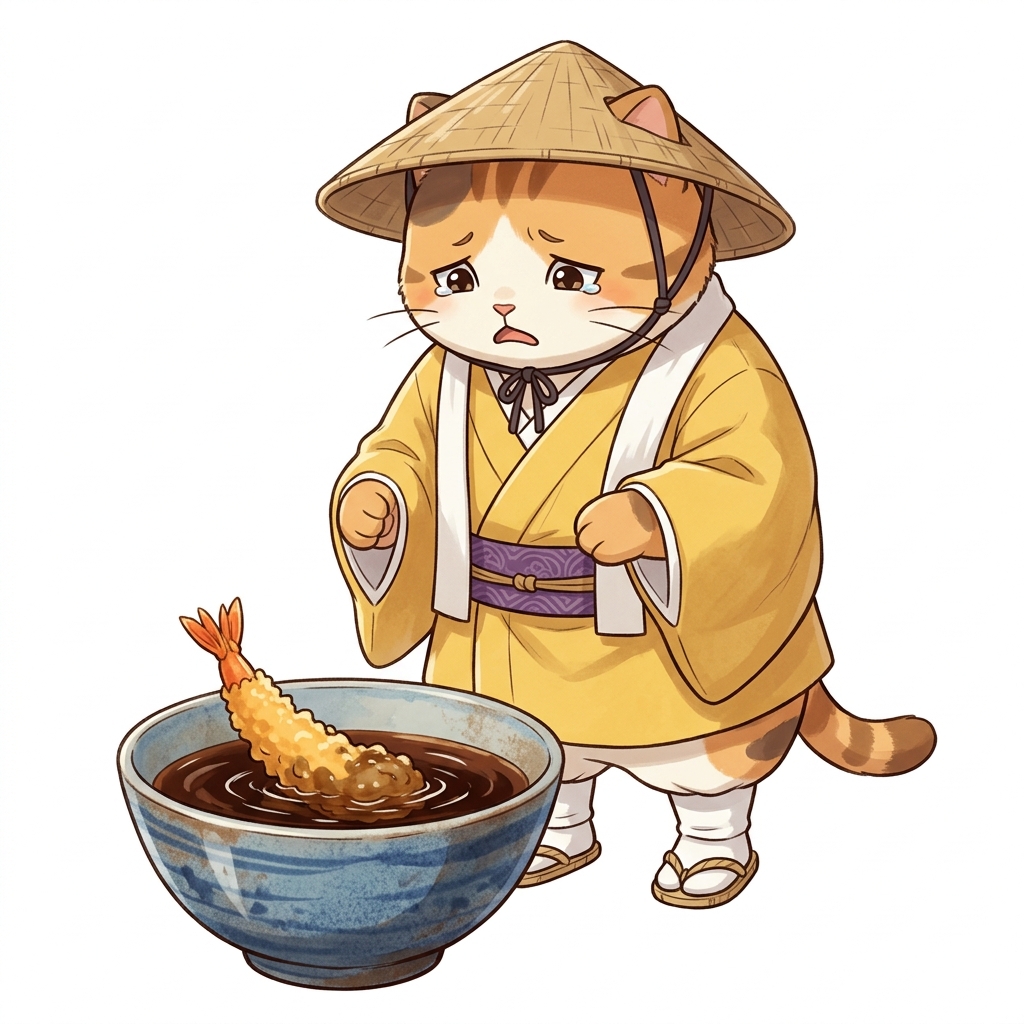
5. Soggy Tempura
The hallmark of great tempura is its impossibly light and crispy batter. However, if you soak your tempura in the warm tentsuyu broth for too long, it quickly turns into a soggy, heavy mess. To fully appreciate the texture, quickly dip the tempura into the broth and eat it immediately. Alternatively, many high-end tempura restaurants recommend skipping the broth altogether and simply sprinkling a little matcha salt or sea salt on top to preserve maximum crispiness.
6. Holding Back the Slurp
In most Western cultures, slurping your food or making loud noises while eating is considered incredibly rude. However, in Japan, loudly slurping your ramen, udon, or soba is actually the correct and polite way to eat! Slurping serves a practical purpose: it cools the hot noodles down as they enter your mouth and aerates the broth, which significantly enhances the flavor and aroma. Don’t be shy—embrace the culture and slurp away with confidence!
Category 3: Bowl & Izakaya Etiquette
7. Dismantling Yakitori
When dining at a Yakitori (skewered chicken) restaurant, some foreigners use their chopsticks to push all the meat off the stick onto a plate, sharing it like a salad. While this might seem polite for sharing, it ruins the dish. Eating the meat directly off the skewer keeps the precious meat juices sealed inside and helps retain the heat. Chefs spend years mastering the art of skewering and grilling; eating it straight from the stick is the ultimate sign of respect.
8. Vigorously Mixing Your Rice Bowl (Donburi)
If you order a Japanese Donburi (like a beef bowl, katsudon, or seafood bowl), resist the urge to mix everything together! Unlike Korean Bibimbap, where mixing is essential, a Japanese rice bowl should not be turned into a uniform mash. You should eat it vertically, scooping a bit of the topping and a bit of the white rice underneath together with each bite. This allows you to enjoy the contrast between the seasoned topping and the plain, fluffy rice.
9. The “Dog Eat” (Inu-gui)
In Japanese dining culture, it is considered beautiful manners to lift small bowls (like your rice bowl, miso soup bowl, or soy sauce dish) off the table and bring them close to your chest level while eating. Leaving all dishes flat on the table and leaning your head down low to meet the food is called “Inu-gui” (dog eating) and is considered very poor form. Always lift the small bowls with your free hand!
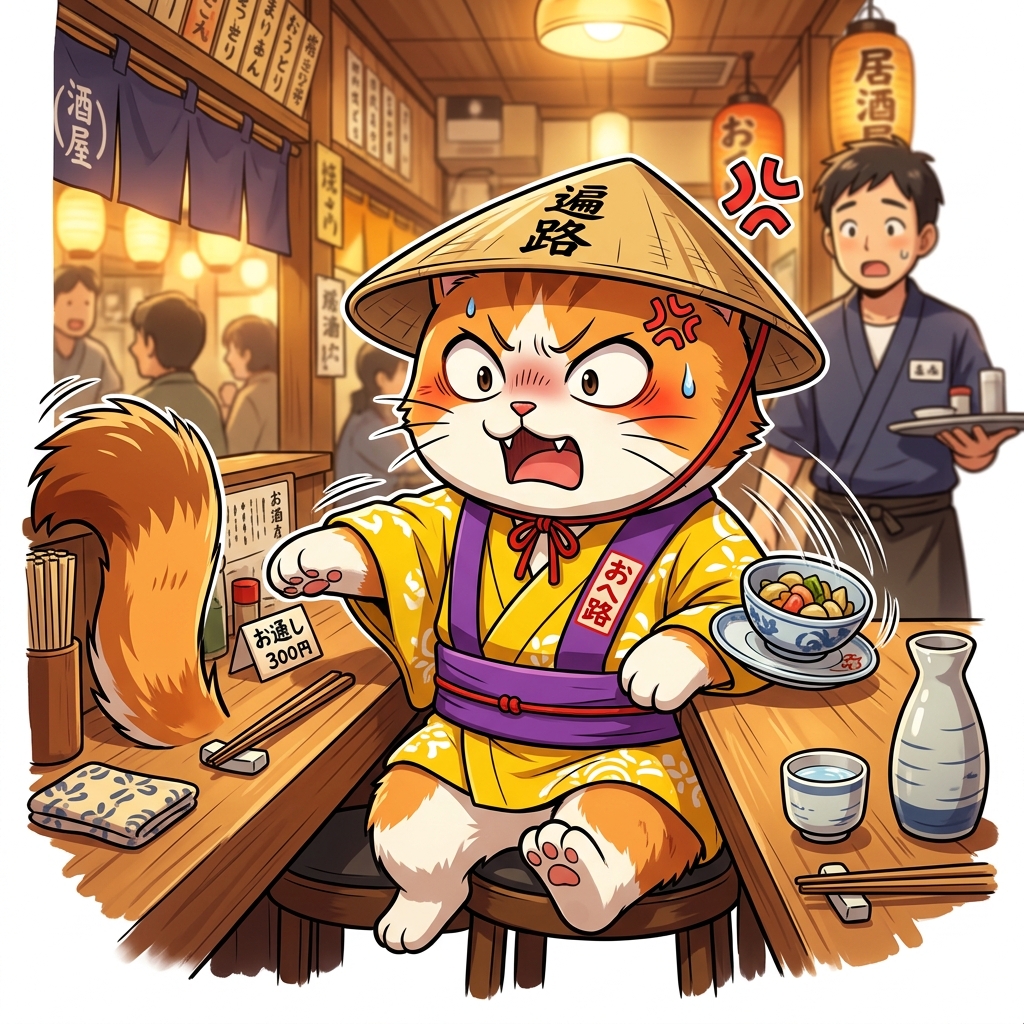
10. Rejecting the “Otoshi”
When you sit down at an Izakaya (Japanese pub), the waiter will often bring you a small appetizer dish that you never ordered. Many travelers get angry, thinking it’s a scam, and try to send it back. Don’t panic! This is called “Otoshi” or “Tsukidashi.” It is a traditional Japanese table charge (usually around 300 to 500 yen) that acts as a welcome snack while you wait for your first drink. It is a deeply ingrained part of Izakaya culture, so just accept it and enjoy the surprise dish.
Category 4: The Ultimate Chopstick Taboos
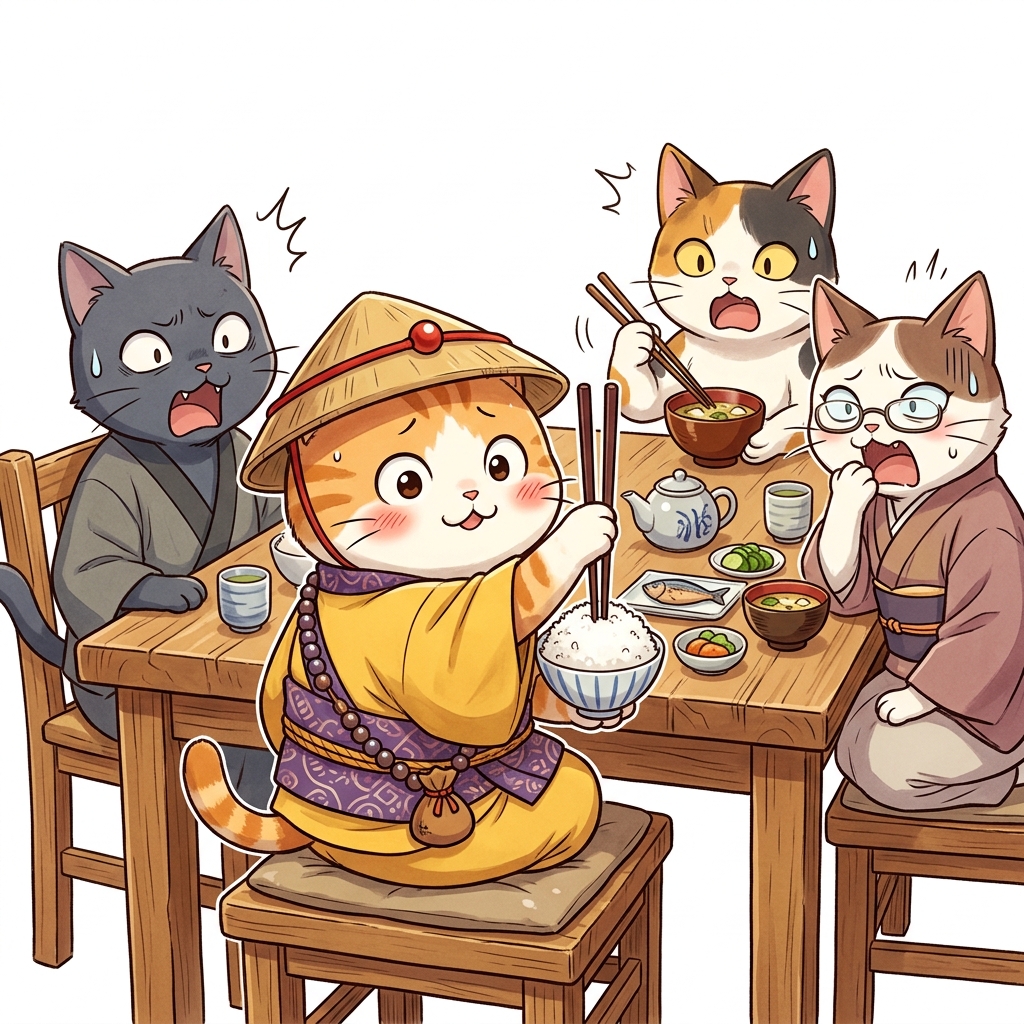
11. Tate-bashi (Standing Chopsticks)
This is arguably the biggest taboo in Japanese dining. Never, ever stick your chopsticks vertically straight down into a bowl of rice and leave them standing there. This visual specifically resembles the incense sticks offered to the dead at a traditional Buddhist funeral. Doing this at a restaurant will horrify the staff and other patrons. Always lay your chopsticks flat across your bowl or, better yet, rest them on a chopstick rest (hashioki) when you are not actively eating.
12. Hashi-watashi (Passing Food with Chopsticks)
Another major taboo is passing food directly from your chopsticks to another person’s chopsticks. Like the standing chopsticks, this mimics a very specific and solemn ritual performed at Japanese funerals, where family members pass the cremated bones of the deceased to one another. If you want to share food with a friend, always place the food onto a small plate first, and let them pick it up from there.
A Note from OHA: The Hidden Magic in Food Rules
(A quick message from my human companion and photographer, OHA!)
“Imposing strict rules on how to eat might feel a bit suffocating at first. However, in Japan, these ‘rules’ aren’t there to restrict you—they are actually hidden secrets to experiencing the food at its absolute most delicious state.
Of course, encountering unknown rules and manners in a different culture is always a mix of excitement and fear. I completely understand. For instance, for us Japanese people, your ‘tipping culture’ is exactly one of those terrifying unknowns when we travel abroad!
Which brings me to a question… If you are reading this blog from a country with a tipping culture, would reading a helpful guide like this require a tip? 😉”
[Matatabi Taro’s Travel Tip]
Don’t let the fear of rules stop you from enjoying Japan’s incredible cuisine! If you enjoyed this guide, leaving a comment or sharing this post is the best tip we could ask for, meow!