
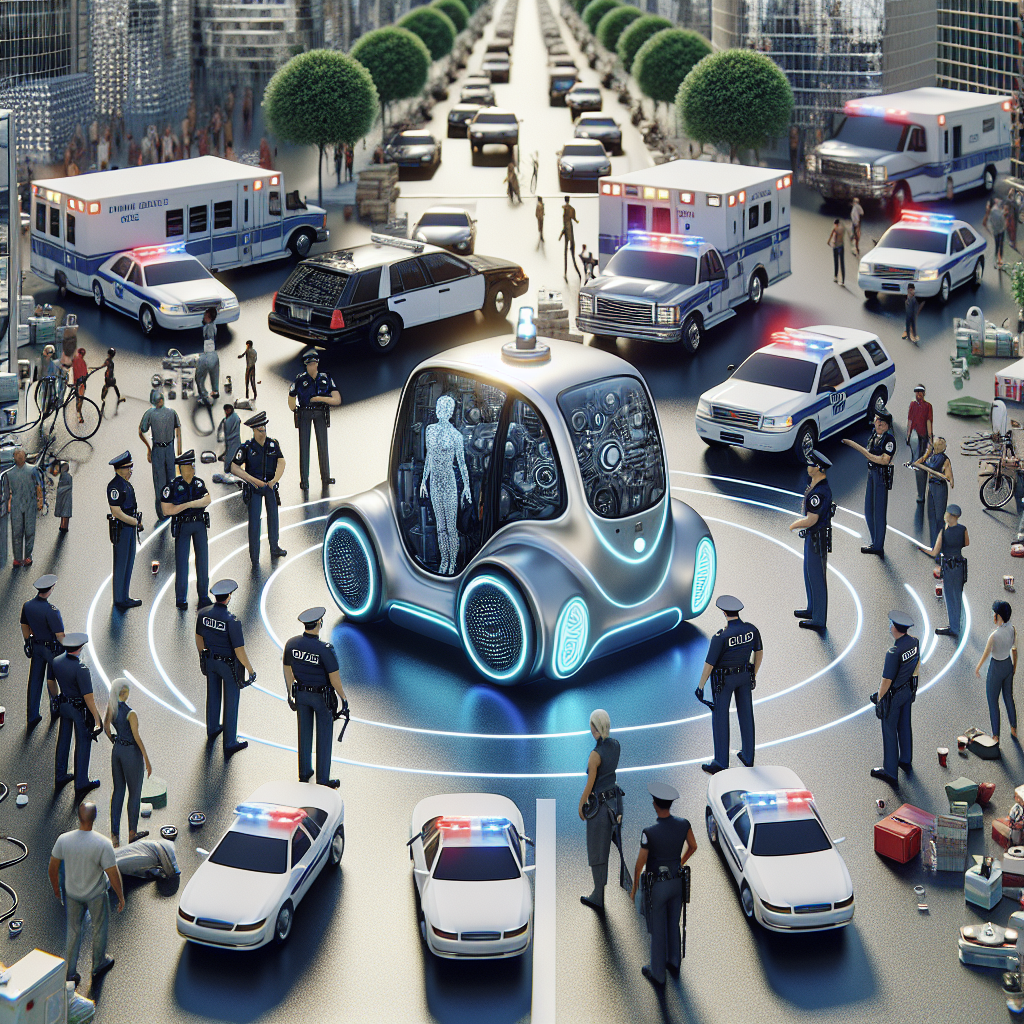
The Intersection of Technology and Emergency Response
In the rapidly evolving world of autonomous vehicles, the emergence of companies like Waymo has sparked both excitement and concern. Waymo, a subsidiary of Alphabet Inc., has been at the forefront of self-driving car technology, promising to revolutionize urban transport. However, a recent revelation has added a new layer of complexity to this narrative: first responders, including police officers, have had to take control of Waymo vehicles during emergency situations.
Waymo’s Journey So Far
Waymo has made significant strides in the development of its self-driving technology, with the goal of creating a safe, efficient, and entirely autonomous ride-hailing service. Yet, while the company’s vehicles are equipped with advanced algorithms and sensors to navigate the streets, they are not without their limitations. In high-stress situations—like crime scenes or medical emergencies—human intervention has proven necessary.
First Responders at the Wheel
Recent reports from TechCrunch highlight several incidents where first responders were required to take control of Waymo’s self-driving vehicles. In at least two active crime scenes, police officers had to move these autonomous cars to ensure public safety and manage the situation effectively. This raises pressing questions about the reliability of autonomous technology in critical scenarios and the role of human oversight in its deployment.
Implications for Autonomous Technology
While the involvement of police in controlling autonomous vehicles might seem alarming, it underscores the necessity for a collaborative framework between technology and human intervention. Here are a few implications to consider:
- Reliability of Technology: The need for human control during emergencies indicates that even the most advanced self-driving systems are not yet foolproof. This reality can affect public trust in autonomous vehicles.
- Legal and Regulatory Challenges: As self-driving cars become more common, lawmakers will need to address liability issues in incidents involving both human and machine operators.
- Future of Emergency Protocols: There may be a growing need to establish protocols for how first responders interact with autonomous vehicles in emergency situations, ensuring that these vehicles can be re-tasked quickly and effectively.
The Road Ahead for Waymo and Autonomous Vehicles
Despite these challenges, the future of self-driving technology remains bright. As companies like Waymo continue to innovate and refine their systems, we can anticipate advancements that enhance safety and reliability. However, it is clear that the path forward will require ongoing dialogue between technology developers and emergency services to create robust solutions that prioritize public safety.
Your Insights and Predictions
As we look to the future, it is likely that we will see an increase in partnerships between autonomous vehicle companies and emergency services. Training programs for first responders on how to interact with these vehicles could become standard practice. Additionally, advancements in AI and machine learning may lead to more sophisticated systems capable of handling emergency scenarios without human intervention. Ultimately, the success of autonomous vehicles will hinge on their ability to integrate seamlessly into existing societal frameworks, ensuring they enhance, rather than complicate, our daily lives.