The Cosmic Challenge of Everyday Technology
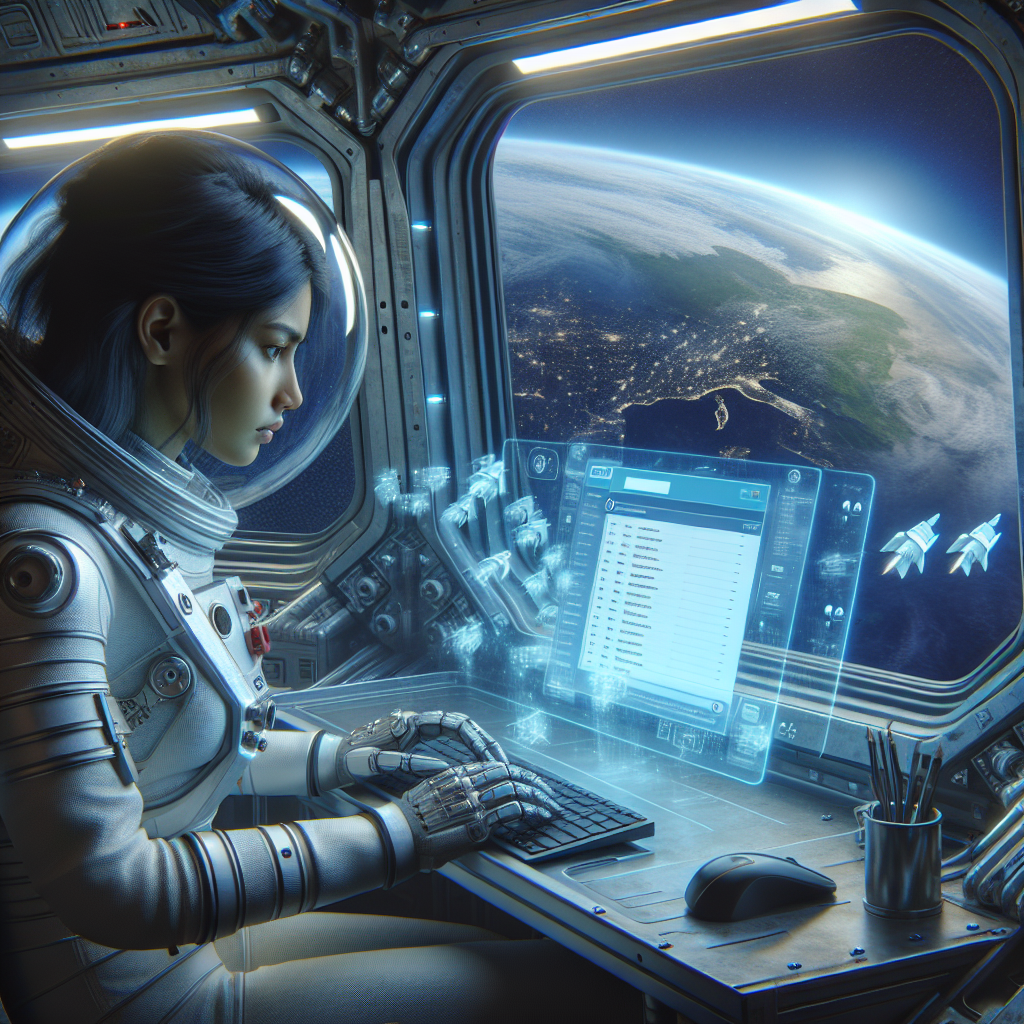
Imagine being in space, orbiting Earth aboard the Artemis II mission, and facing a tech issue that many of us encounter daily: your email just won’t send. This was the reality for NASA Artemis II commander Reid Wiseman, who recently experienced a malfunction with Microsoft Outlook while on his historic journey into the cosmos.
When Earthly Problems Meet Outer Space
Reid Wiseman’s predicament offers a unique glimpse into the intersection of advanced aerospace technology and the everyday digital tools we often take for granted. While astronauts are trained to handle a multitude of complex scenarios, the failure of a seemingly straightforward application like Outlook underscores the challenges of maintaining seamless communication from space.
During the Artemis II mission, which aims to return humans to the Moon, Wiseman encountered the unwelcome surprise of a malfunctioning email client. This incident not only highlights the technical difficulties faced by astronauts but also shines a light on the inherent complexities of managing software in an environment that is anything but ordinary.
Why Tech Glitches Matter in Space
Every email sent and received is crucial for astronauts, whether it’s a quick note to mission control, a detailed report on their activities, or updates on their health and status. The ability to communicate effectively can have serious implications for mission success and astronaut well-being. Thus, the malfunctioning Outlook was not just an annoyance; it was a reminder of how dependent we are on technology, even at the edge of space.
The Role of Technology in Future Space Missions
This incident raises an important question: how prepared are we to handle technology failures in space? As we look toward more ambitious missions, including Mars exploration and potential settlements on other celestial bodies, it’s clear that robust, reliable communication systems will be a cornerstone of future endeavors.
NASA and other space agencies must prioritize developing resilient technology that can operate effectively in the harsh environment of space. This includes not only hardware but also software that can withstand the unique challenges posed by microgravity, radiation, and the vast distances involved.
Lessons Learned and Future Predictions
The challenges faced by Wiseman and his team remind us that even the most advanced technologies are not infallible. As we venture further into space, we must learn from these experiences and adapt our systems accordingly. In the coming years, we can expect to see advancements in AI-driven troubleshooting systems, more intuitive communication platforms, and perhaps even the integration of quantum computing to address the complexities of space communication.
Moreover, this incident serves as a gentle nudge to tech companies to ensure their products are optimized for all environments, including the most extreme. As we continue to explore new frontiers, the collaboration between technology developers and space agencies will be crucial in ensuring that astronauts can focus on their missions without being bogged down by software issues.
Final Thoughts
In conclusion, the email troubles faced by NASA astronauts may seem trivial in the grand scheme of space exploration, but they are indicative of the larger challenges that lie ahead. As we push the boundaries of human presence in space, we must ensure that our technology is as reliable as the astronauts who operate it.
As we continue to innovate and explore, let’s keep in mind that even in the vastness of space, the ordinary challenges of technology can still make their mark. The future of space travel will undoubtedly be shaped by the lessons learned from these encounters.