
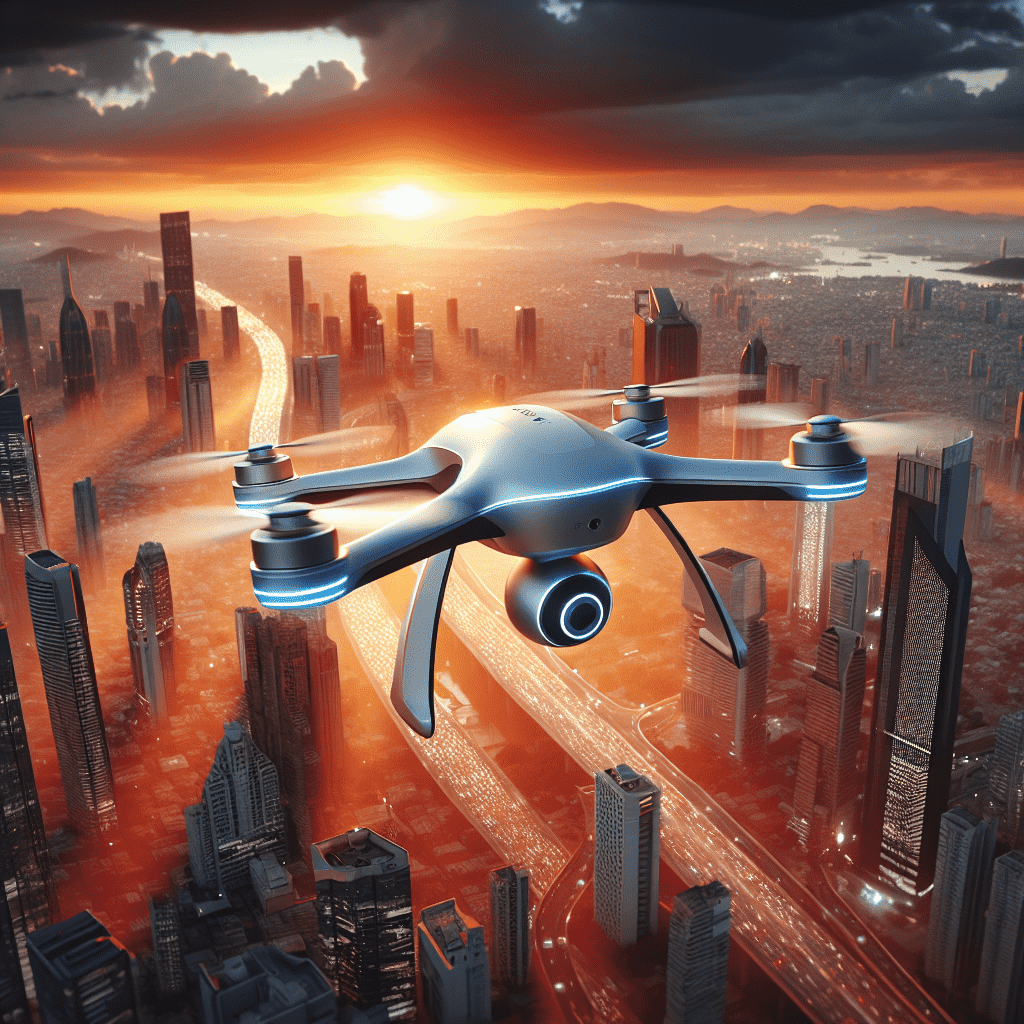
Introduction to the Future of Public Safety
In an ever-evolving technological landscape, the public safety sector is witnessing a groundbreaking innovation that could redefine emergency response. This week, Brinc, a startup founded by a former Thiel fellow, unveiled its latest 911 response drone, designed to replace traditional police helicopters. This development promises to enhance the efficiency and effectiveness of emergency services, making it a game-changer for law enforcement and public safety agencies.
The Need for Advanced Emergency Response Solutions
As cities grow and populations increase, the demand for rapid and efficient emergency response has never been more critical. Police helicopters, while effective, come with limitations: high operational costs, the need for skilled pilots, and logistical challenges associated with urban environments. Brinc’s innovative drone seeks to address these issues, offering a cost-effective, agile, and versatile alternative.
What Makes Brinc’s Drone Stand Out?
Brinc’s drone distinguishes itself through several key features:
- Cost Efficiency: With lower operational costs compared to helicopters, this drone allows police departments to allocate resources more effectively.
- Rapid Deployment: Designed for immediate response, the drone can be launched quickly in emergency situations, reducing response times significantly.
- Advanced Technology: Equipped with high-definition cameras and real-time data transmission capabilities, the drone provides officers with critical information on the ground, improving decision-making and situational awareness.
- Environmentally Friendly: Drones produce fewer emissions than helicopters, aligning with growing sustainability efforts in public safety operations.
Real-World Applications and Benefits
The implications of Brinc’s drone extend beyond mere cost savings. Imagine a scenario where a missing person is reported in a densely populated urban area. Instead of waiting for a helicopter to arrive, the drone can be deployed instantly, scanning the area from above and providing live feedback to ground teams. This capability could not only save time but also lives.
Furthermore, the drone’s ability to operate in challenging environments—such as densely populated urban settings or hazardous areas—offers law enforcement agencies a versatile tool in their arsenal. Whether it’s managing crowd control during large events or monitoring situations during natural disasters, the applications are vast.
Challenges Ahead for Drone Integration
While the potential is enormous, integrating drones into public safety operations is not without challenges. Regulatory hurdles, privacy concerns, and public acceptance are significant factors that must be addressed as this technology becomes more prevalent. Law enforcement agencies will need to develop clear guidelines and protocols to ensure drones are used responsibly and ethically.
The Future of Drones in Public Safety
As we look ahead, the future of drones in public safety appears bright. With advancements in artificial intelligence, machine learning, and drone technology, we can expect even more sophisticated capabilities. Brinc’s new drone could be the first of many innovations that transform how emergency services operate, making communities safer and more responsive.
In conclusion, Brinc’s launch of a police helicopter replacement drone is not just a technological advancement; it marks a shift in how we think about public safety. The combination of speed, efficiency, and cost-effectiveness positions drones as essential tools for law enforcement in the years to come. As this trend continues to evolve, it will be fascinating to see how law enforcement adapts and integrates these technologies into their operations, ultimately creating a safer world for all.